








Communication is key, but how do you ensure students know the opportunities it unlocks?
Bank of America provided PeerForward teams with an opportunity to unlock their potential through a session titled “Communication.”
Seated in classrooms across Prince George’s County, Maryland and New York City, students and Peer Leaders eagerly awaited hearing more about how to become effective, confident communicators.
At Central High School, presenters Lisbeth Cordon-Thomas, Community Lending Officer Assistance Vice President, and William Traband, a Community Lending Officer, guided 30 students through communication best practices.
Meanwhile, at Eleanor Roosevelt High School, Bank of America’s Minjal Parikh and Daniel Karabaich, Vice President Financial Center Manager, emphasized the importance of body language, vocal tone, and word choice to a room of more than 20 scholars.
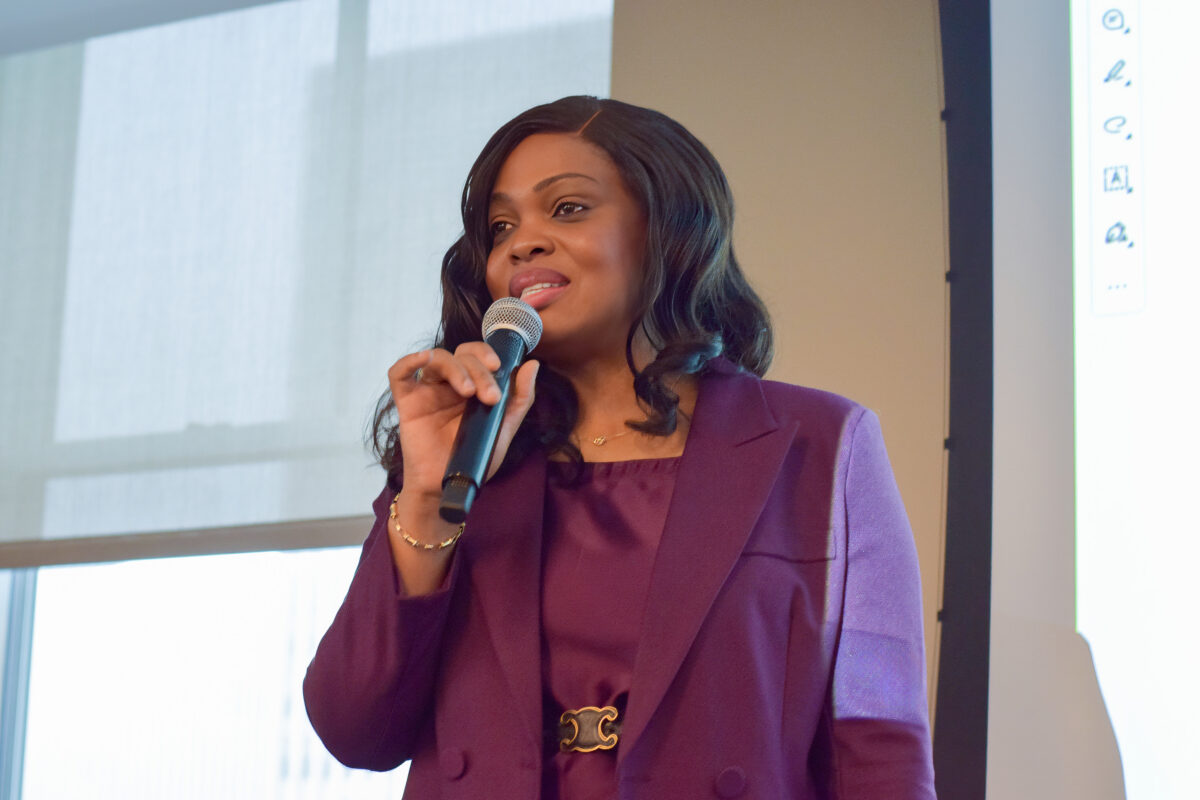
Soon, these students will encounter new social settings, like college campuses and new workplaces, where these skills will be imperative to their success. Much like it was for VP Senior Academy Manager Irene Awuah, who led the Bank of America session for our New York City PeerForward Teams.
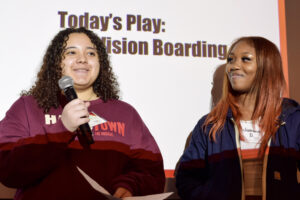
With more than 50 influential Peer Leaders in attendance, Irene shared her own journey, exemplifying the power of effective communication and personal storytelling. She detailed her experiences navigating the corporate world as a woman, reminding our young lady Peer Leaders to not minimize themselves with their language.
Her other lessons included: 1) a recommendation against excessive apologies, 2) using straightforward but respectful language, 3) writing effective emails, and 4) crafting an effective elevator pitch. The latter, something very few students were previously knowledgeable about.
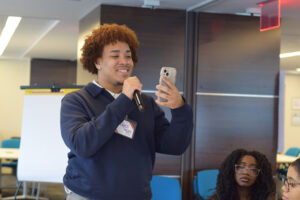
Our Peer Leaders and their classmates that joined the Bank of America activations were very grateful for the experience. 100% of survey respondents said they enjoyed the presentation!
Thank you, Bank of America, for progressing the skill set of our Peer Leaders through effective communication. We are confident they will use their newfound knowledge as they enter college and, subsequently, the workforce in the coming years.